
 Until now, complaints about hormonal birth control – mood swings, nausea, breast tenderness – have almost exclusively come from the woman taking the hormones. However, recent findings about one popular type of birth control should have women and their intimate partners equally concerned. The issue is with a potentially considerable increased risk of HIV infection for both the woman and her partner, and the new research even has some HIV/AIDS scientists saying “I told you so.”

I will be interested to watch the trends in Pfizer stocks in the coming days, because it’s their injectable long-acting contraceptive, Depo-Provera, that is at the heart of a controversial new study in Lancet Infectious Diseases. A team based at the University of Washington in Seattle assessed nearly 4,000 couples in seven sub-Saharan African countries for rates of HIV acquisition and transmission, and the findings were pretty clear cut: women using long-acting progesterone-based birth control or low-dose combination hormonal oral contraceptives were twice as likely to acquire HIV, and their male partners were twice as likely to contract the virus from them.
The Depo-Provera shot, used by over 90 million women worldwide, is made convenient by the fact that it only needs to be administered once every three months to be effective. The active ingredient in the shot is the hormone progesterone, which is normally at its highest levels during the second half of a woman’s menstrual cycle. As a contraceptive, progesterone acts by thinning the uterine wall so that a fertilized egg cannot attach. However, this hormone also thins the vaginal wall, which may make it easier for the HIV virus to infect uninfected women and to be passed on to their male partners thereafter.
 So why are some scientists basically saying “I told you so”? Well, fifteen years ago in 1996, a study was published in Nature Medicine (a well-read journal) that showed female rhesus monkeys with progesterone implants had 7.7 times the risk of contracting simian immunodeficiency virus (essentially monkey HIV) compared to monkeys implanted with placebo.
“How many years has it been that the non-human primate model, and other researchers, have been warning about this and being ignored? What, 15 years now? Shocking.” - John Moore, HIV scientist at Weill Cornell Medical College of Cornell University, in an email to colleagues and journalists on October 5.
The WHO will meet early next year to decide whether to revise the recommendation for injectable contraceptive use in HIV-positive women and women partners of HIV-positive men. But why weren’t these issues considered 15 years ago, when the study in monkeys came out? The first author of that study, Preston Marx, says it’s because nobody wanted to deal with a threat to a cheap and accessible contraceptive method with numerous benefits in developing countries. He says,
“I was in one meeting accused of massaging the data. It was real heat.”
On the other side of the debate, 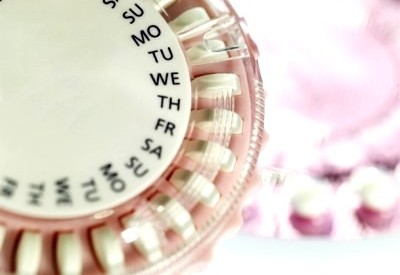 professionals in public health and epidemiology point out that hormonal contraceptive use was low among the cohort studied (anywhere between 15-33% of women depending on the time point in the study). Also, birth control is of especially great benefit in developing countries where unwanted pregnancies can bring serious harm or even death to the pregnant woman.
That said, this is clearly a very controversial finding with incredibly far-reaching implications, depending on what follow-up studies conclude. At the very least, women everywhere who are on birth control or considering it, as well as the partners of those women, should be aware of this ongoing debate.
In the interest of being balanced, check out this story about what people consider the confounding factors in this study: “The Faulty Birth-Control-HIV Link” in The Daily Beast.
Stay nerdy and stay safe.
Wadman, M. (2011). Contraceptive risk of HIV long suspected Nature DOI: 10.1038/news.2011.582
Heffron R, Donnell D, Rees H, Celum C, Mugo N, Were E, de Bruyn G, Nakku-Joloba E, Ngure K, Kiarie J, Coombs RW, Baeten JM, & for the Partners in Prevention HSV/HIV Transmission Study Team (2011). Use of hormonal contraceptives and risk of HIV-1 transmission: a prospective cohort study. The Lancet infectious diseases PMID: 21975269
Marx PA, Spira AI, Gettie A, Dailey PJ, Veazey RS, Lackner AA, Mahoney CJ, Miller CJ, Claypool LE, Ho DD, & Alexander NJ (1996). Progesterone implants enhance SIV vaginal transmission and early virus load. Nature medicine, 2 (10), 1084-9 PMID: 8837605


As far as mechanism, did they look at condom use as well? One could imagine that couples using hormonal birth control might be less likely to use condoms, leading to a higher risk of seroconversion. Although it’s possible condom use was so low in their cohort overall that there couldn’t be an effect.
Actually I think people do consider exactly that to be a confounding factor in the study…”The Faulty Birth-Control-HIV Link“
Well, I guess they did control for condom use, which is the best they could do given their study design. Wow, this study raises a lot of questions. Now that there seems to be an increased risk, how do you study it more? Would you have to build a cohort of serodiscordant couples who who don’t use condoms all the time? Or is there something easier that I’m not thinking of? You’d have to then educate them on the use of condoms like crazy because they’re serodiscordant (!!!) and then collect data from the ones that don’t listen to you. Then you’d have to compare the increased risk of death from AIDS to the increased risk of complications from childbirth before you make a policy recommendation.
Man, why are all of the important problems the tricky ones…
I’m verrry interested as to how policy people would try tactfully compare AIDS risk with childbirth in the developing world….you ask a great question – what next?!