
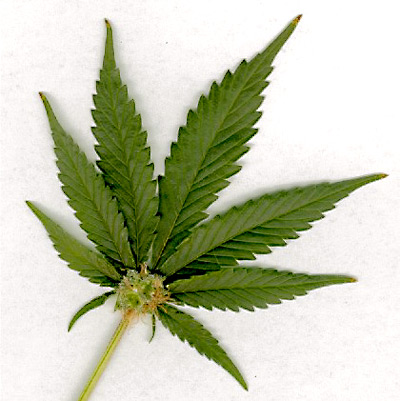
 I am a pompous scientist. As such, I am thoroughly indignant about the fact that many of my colleagues will probably never be able to do experiments that involve the natural, known bioactive, medicinal compounds in the plant Cannibis sativa. In plainer terms, I’m pissed that the illegality of weed keeps people from testing its efficacy in fighting diseases, even in controlled laboratory settings.
The very recent publication of a draft of the Cannabis sativa genome has inspired me to briefly review why it’s so hard to do research on weed, and to highlight studies that have shown the benefits that can come from considering marijuana as more than just an abused substance.
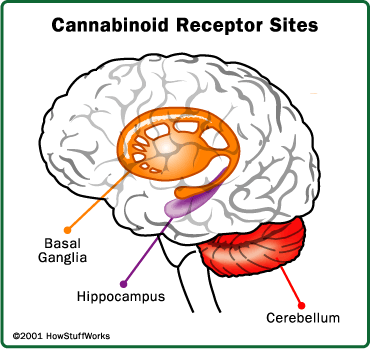
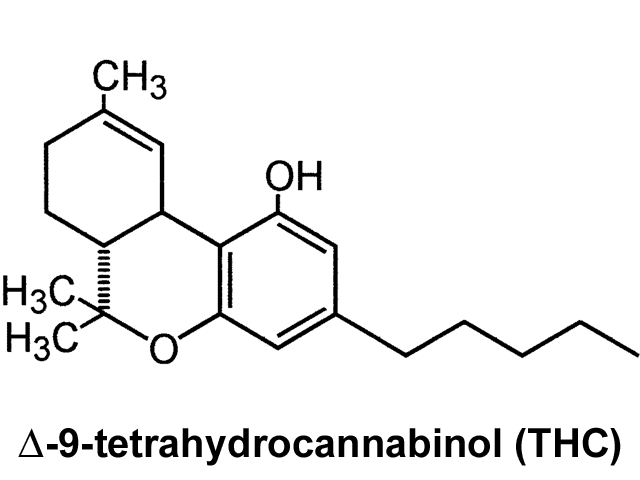
Some would say our brains were made for marijuana, or vice versa, because of the abundant cannabinoid receptors that are directly activated by the primary psychoactive chemical in marijuana — a cannabinoid called delta-9-tetrahydrocannabinol (THC). The human body even produces its own endocannabinoids, which activate the same cannabinoid receptors. These receptors are known to have a role in everything from pain sensation to mood to appetite, and more, with some functions perhaps yet to be discovered.
But about that medical research: much of what’s difficult in drug trials is establishing how toxic the test drug is and what its side effects are. Well, I think it’s generally accepted that there’s no documented human fatality from THC overdose, and as for side effects…well, just watch any one of the myriad “stoner movies” out there (e.g. 1 , 2


So what’s the big deal? Well, it all comes down to the fact that the Drug Enforcement Agency (DEA) classifies marijuana as a Schedule 1 drug, where it joins such baddies as heroin, LSD, and ecstasy. Schedule 1 drugs are defined as those that “have no currently accepted medical use in treatment in the United States.” The fact that marijuana is listed among these drugs can be perplexing, what with medical marijuana being legal in at least 16 states and our nation’s capitol.
"No medical use"? Let science decide.
So let’s say you’re a medical researcher, and you want to study the efficacy of marijuana in treating disease X; here are the three hurdles you have to jump: 1) applying for and receiving a license from the DEA, who fears Schedule 1 drugs getting into the wrong hands; 2) getting express approval from your research institution, who just might not want the stigma that comes with your research; and 3) securing funding, which, for Schedule 1 drugs, mostly comes from the National Institute on Drug Abuse (NIDA). NIDA has a government-sanctioned monopoly as the only legal source of marijuana for research in the U.S., and word on the street is that they don’t like to fund research that could conflict with their interest in, well, drug abuse.
To make a long story short, the debate over legalizing marijuana for medical research has a lot to it. Even if this legalization did occur, there would need to be firm oversight to make sure everyone and their mom didn’t run to sign up for studies just to get some reefer. But, in hopes of tilting the balance of this plant’s reputation, I am featuring a list of research studies in which THC, marijuana’s main active compound, appears to have done some good:
1. Cannabinoid Neuroimmune Modulation of SIV Disease. Monkeys with simian immunodeficiency virus (SIV, the monkey version of HIV) were given THC and experienced slowed disease progression, decreased amounts of virus, and milder tissue inflammation.
2. Chronic administration of THC prevents the behavioral effects of intermittent adolescent MDMA administration and attenuates MDMA-induced hyperthermia and neurotoxicity in rats. THC protected rats from ecstasy-induced hyperthermia and neurotoxicity, as well as prevented ecstasy’s behavioral effects.
3. Cannabinoids mediate opposing effects on inflammation-induced intestinal permeability. In inflammatory bowl diseases (IBD) like Crohn’s disease and ulcerative colitis, the intestines are inflamed; in this study, THC accelerated recovery from induced inflammation in human colorectal cells.
4. Neuroprotective effects of phytocannabinoid-based medicines in experimental models of Huntington’s disease. A THC-based treatment delayed the progression of Huntington’s Disease in rats.
5. Targeting cannabinoid receptors as a novel approach in the treatment of graft-versus-host disease: evidence from an experimental murine model. Mice with graft-versus-host disease were given THC and had increased numbers of immune cells, less tissue injury, less weight loss, and better overall survival.
6. Anti-tumoral action of cannabinoids on hepatocellular carcinoma: role of AMPK-dependent activation of autophagy. THC reduced the viability of human hepatocellular carcinoma (liver cancer) cells and of tumors grown from human cancer cells implanted in mice.
7. The cannabinoid receptor agonist THC attenuates weight loss in a rodent model of activity-based anorexia. THC caused anorexic rats to gain weight.
8. Pre- and post-conditioning treatment with an ultra-low dose of Δ9-tetrahydrocannabinol (THC) protects against pentylenetetrazole (PTZ)-induced cognitive damage. Mice given THC before or after induced epilepsy (a model of brain injury) were protected from long-lasting deficits in learning and memory.
9. A combined preclinical therapy of cannabinoids and temozolomide against glioma. THC had anti-tumor effects against gliomas (brain tumors) that were resistant to temozolomide, the standard treatment for gliomas; the gliomas in the studies were grown by implanting human glioma cells in mice.
10. Acute and chronic cannabinoid extracts administration affects motor function in a CREAE model of multiple sclerosis. In a mouse model of multiple sclerosis, injection with a THC-rich Cannabis sativa extract reduced neurological deficits.
…And that’s all just from this year.
van Bakel H, Stout JM, Cote AG, Tallon CM, Sharpe AG, Hughes TR, & Page JE (2011). The draft genome and transcriptome of Cannabis sativa. Genome biology, 12 (10) PMID: 22014239


Marijuana is the safest drug with actual benefits for the user as opposed to alcohol which is dangerous, causes addiction, birth defects, and affects literally every organ in the body. Groups are organizing all over the country to speak their minds on reforming pot laws. I drew up a very cool poster featuring Uncle Willie Nelson and The Teapot Party for the cause which you can check out on my artist’s blog at http://dregstudiosart.blogspot.com/2011/01/vote-teapot-2011.html Drop in and let me know what you think!
You’re a talented artists, that’s for sure! Objectively, scientifically, I am mind-boggled by the legal status of marijuana vs. alcohol/cigarettes in the U.S….
Pingback: Today’s cigarette smokers: tomorrow’s crackheads? | Try Nerdy
Nice post! Have you tried using BioNot? It’s an awesome new tool for tracking down those negative findings that always get brushed under the carpet!
I’ve given a summary here:
http://neurobonkers.com/?p=4088
Try searching Bionot for cannabis and other terms such as addiction, memory, cognitive, etc. I reckon you’ll be pleasantly surprised!
Keep up the good work!
Many thanks for the resource!
Pingback: Know your fat! | Try Nerdy