
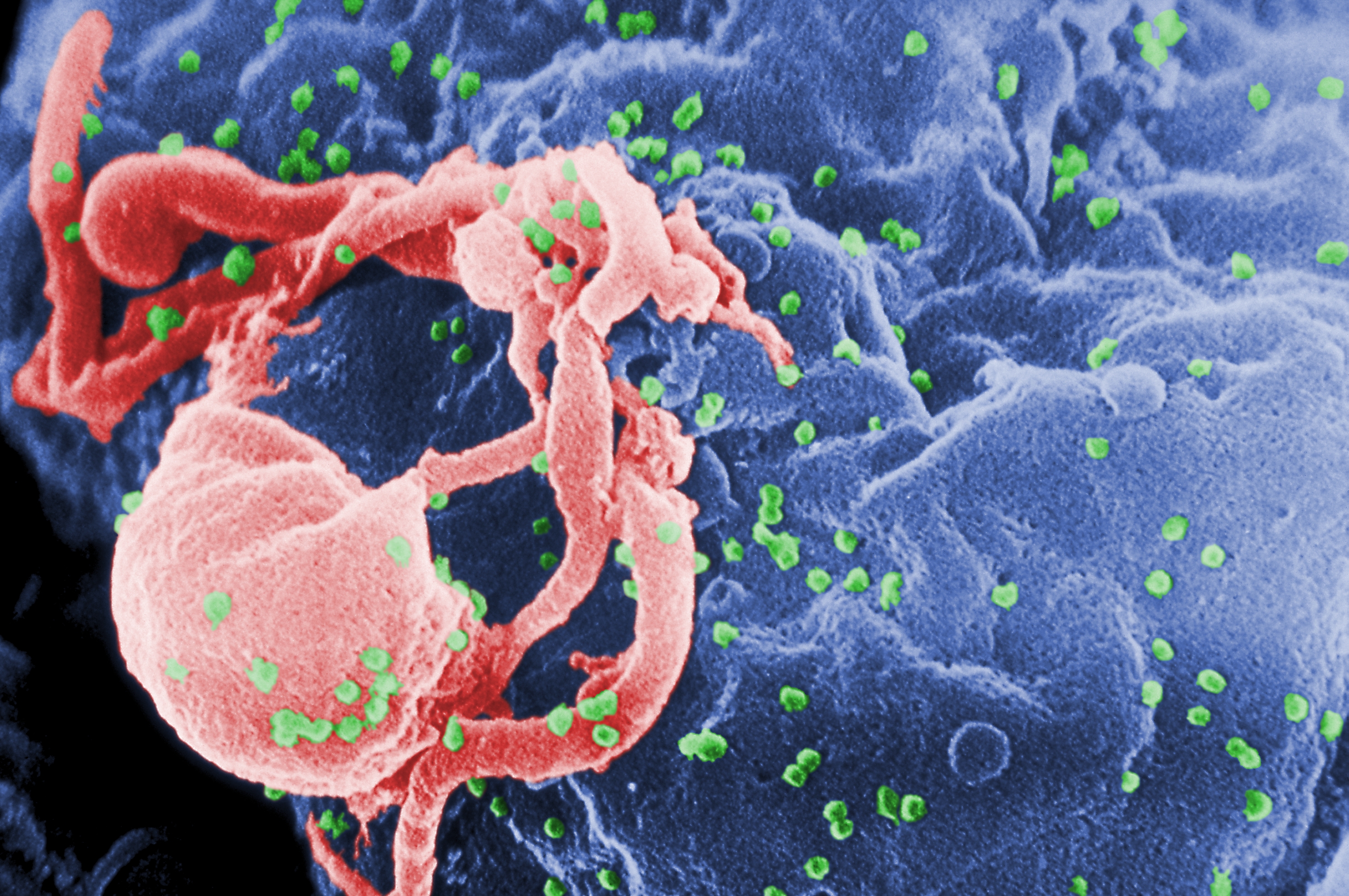
 Background: Acquired immunodeficiency syndrome (AIDS) is an immune disease caused by infection with human immunodeficiency virus (HIV) and has been responsible for more than 2 million deaths worldwide each year since 2003. The HIV virus attacks and kills immune cells until their numbers are so low that a person is classified as having AIDS, with essentially no remaining cell-based immunity against opportunistic infections that could normally be fought off by the body but are now potentially fatal to the afflicted person. Stopping the HIV virus from replicating itself and killing immune cells can help control the infection and do much to delay the onset of AIDS, and anti-retroviral therapies have been quite successful in this regard. Commonly, anti-retroviral therapies work by mimicking the structure of DNA components such that when the virus tries to replicate itself using these “analogs,” it cannot actually survive (this would be akin to trying to live by eating plastic shapes that look convincingly similar to real food).
However, despite the benefits of anti-retroviral therapies against AIDS progression, the authors of this paper suggest that these same therapies are associated with the accumulation of mutations in the energy-producing mitochondria of cells — the same kinds of mutations that would naturally occur later in life as part of the aging process.
Title: Mitochondrial aging is accelerated by anti-retroviral therapy through the clonal expansion of mtDNA mutations
Authors: Brendan A. I. Payne, Ian J. Wilson, Charlotte A. Hateley, Rita Horvath, Mauro Santibanez-Koref, David C. Samuels, D. Ashley Price & Patrick F. Chinnery
Date of publication: June 26, 2011
Direct Link: http://www.nature.com/ng/journal/vaop/ncurrent/full/ng.863.html
PMID: 21706004
Abstract: In the past few years it has been reported that people who are successfully treated with anti-retroviral therapies against HIV infection show signs of premature aging and ultimately experience progressive multi-organ disease. By performing extensive DNA sequencing and analysis on the single-cell level, these researchers found that patients who had used anti-retroviral drugs had increased mutations in their mitochondria (a cellular subcompartment for generating energy). Because the patients also exhibited premature aging, these results suggest that mitochondrial DNA mutations may play a role in the normal aging process that we all experience.
Methods: The authors obtained frozen muscle biopsy samples from HIV-positive patients treated with or without retroviral drugs and looked for abnormalities in mitochondrial proteins. Also, extremely sensitive sequencing of mitochondrial DNA was used to characterize the mutations in that DNA.
Results: Thirty-three HIV-positive adults under the age of 50 provided muscle biopsies for this work. The authors were looking at a mitochondrial protein that is used by the mitochondria to make energy - the more abnormal the protein, the less healthy the mitochondria. In the patients who had not received anti-retroviral drugs, the amount of this protein, cytochrome c oxidase (COX), was the same as in an HIV-negative control population. However, HIV-positive patients who had received anti-retroviral drugs showed a significant reduction in the amount of COX protein – the protein levels were comparable to or even more reduced than what would be found in the elderly. DNA was analyzed in single cells from these patients and the cells deficient in COX protein showed significantly more deletions in the mitochondrial DNA, including deletions commonly seen in healthy elderly adults (recall, though, that the patients in this research are less than 50-years-old). Also, the total amount of mitochondrial DNA in COX-deficient cells was significantly increased, and the authors propose a theory of “clonal expansion” in these patients: some of the mutated DNA underwent rapid replication, propagating the mutation until a high proportion of the total DNA was mutated.
Bottom line: This research makes two points that I think are highly relevant for disease and health: 1) The knowledge that some anti-retroviral therapies induce a premature aging effect is something that every HIV-positive individual has a right to know before beginning those treatments. Also, now that a potential mechanism has been described for how these drugs may be having an aging effect, researchers have the option to develop combination therapies to stop HIV virus replication while also preventing mitochondrial DNA mutations from accumulating. 2) This work supports the idea that mitochondrial DNA mutations may be part of what causes aging in healthy people, rather than a consequence of the aging process itself.
Payne BA, Wilson IJ, Hateley CA, Horvath R, Santibanez-Koref M, Samuels DC, Price DA, & Chinnery PF (2011). Mitochondrial aging is accelerated by anti-retroviral therapy through the clonal expansion of mtDNA mutations. Nature genetics PMID: 21706004


